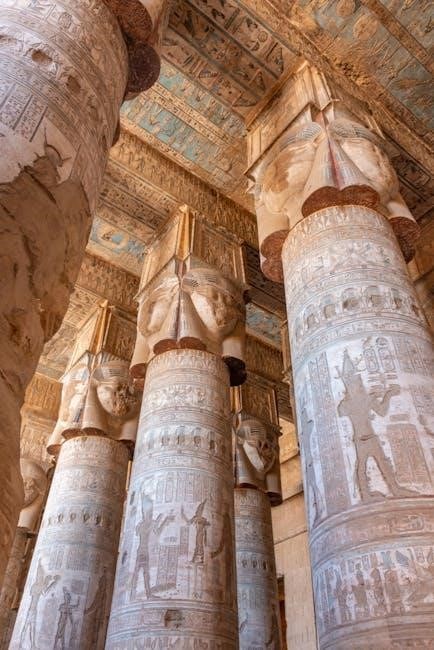
Ancient Egyptian mythology boasts a vast pantheon, meticulously documented in resources like the “Egyptian Gods” PDF found on Scribd, detailing familial connections and divine roles.
This comprehensive guide explores deities from primordial forces to major gods like Osiris and Isis, offering insights into their significance and complex relationships.
The Significance of Egyptian Mythology
Egyptian mythology wasn’t merely a collection of stories; it was the bedrock of their civilization, influencing art, architecture, governance, and daily life. The “Egyptian Gods” PDF available on Scribd illuminates how these beliefs shaped their worldview, offering a structured understanding of their complex pantheon.
Understanding these deities provides insight into ancient Egyptian concepts of creation, death, and the afterlife. The document details how gods like Atum, representing self-creation, and Osiris, embodying resurrection, were central to their spiritual beliefs. The familial structure presented – from primordial beings like Nun to the Ennead and subsequent generations – reveals a carefully constructed cosmology.
This mythology offered explanations for natural phenomena and provided a moral framework, influencing societal norms and the pharaoh’s divine authority. The PDF serves as a valuable resource for deciphering these profound cultural influences.
Sources for Studying Egyptian Deities (PDF Focus)
A key resource for exploring ancient Egyptian deities is the “Egyptian Gods” PDF hosted on Scribd. This document provides a readily accessible overview of the complex pantheon, organized in a clear, family-tree structure. It’s a valuable starting point for understanding the relationships between gods and goddesses.
The PDF details deities spanning primordial forces – Nun, Naunet, Huh, and Hauhet – to major figures like Osiris, Isis, Seth, and Nephthys. Its organization allows for tracing the lineage from early creation myths involving Atum and Amun, through the Ennead, and into the later generations.
While not exhaustive, it offers a concise and informative introduction. Further research can build upon this foundation, utilizing academic texts and archaeological findings to deepen understanding of each deity’s role and significance within ancient Egyptian society.
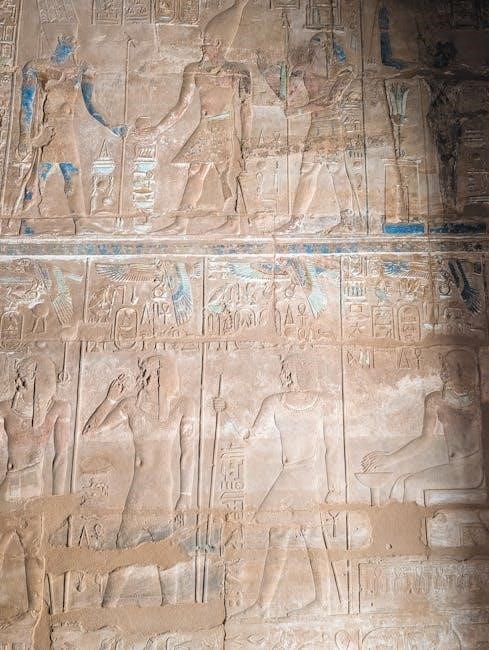
Primordial Deities
These foundational gods – Nun, Naunet, Huh, and Hauhet – represent the chaotic state before creation, as outlined in the “Egyptian Gods” PDF resource.
Nun: The Primordial Waters
Nun, representing the chaotic, dark waters, existed before creation according to ancient Egyptian cosmology, as detailed in the “Egyptian Gods” PDF available on Scribd. He embodies the boundless, formless abyss from which all things emerged. This deity wasn’t depicted with a specific form, symbolizing the undefined nature of the pre-creation state.
He is considered the source of all life and existence, yet also represents the potential for non-being. The PDF highlights Nun as the first of the primordial deities, existing in a state of complete stillness and darkness. From Nun arose the first land, and subsequently, the foundations for the Egyptian cosmos. His presence signifies the eternal cycle of creation and dissolution, a core tenet of Egyptian belief.
Naunet: The Primordial Abyss
Naunet, the feminine counterpart to Nun, embodies the primordial abyss and the vast, dark waters that existed before creation, as outlined in the “Egyptian Gods” PDF sourced from Scribd. She represents the infinite, watery depths and is intrinsically linked to the concept of potential and the unknown. Like Nun, Naunet lacks a defined form, reflecting the formless nature of the pre-creation state.
Often depicted as a serpent or a woman with a serpentine body, Naunet symbolizes the chaotic forces that preceded order. The PDF clarifies her role as a fundamental element in the creation myth, alongside Nun. She is the embodiment of the watery void, the source from which all life eventually sprang. Her existence highlights the duality inherent in Egyptian cosmology – chaos and order, darkness and light.
Huh: The Infinity of Time
Huh, representing the concept of infinity and timelessness, is a crucial primordial deity detailed within the “Egyptian Gods” PDF available on Scribd. He embodies the endless expanse of time, both past and future, existing beyond human comprehension. Often depicted as a frog-headed god, symbolizing rebirth and the cyclical nature of time, Huh is a silent observer of creation and existence.
The PDF emphasizes Huh’s role as a member of the Ogdoad, the eight primordial deities who existed before the creation of the world. He is the counterpart to Hauhet, representing the infinite space. Together, they define the boundaries of existence. Huh’s presence signifies the eternal flow of time, a fundamental aspect of Egyptian cosmology and the continuous cycle of life, death, and resurrection.
Hauhet: The Infinity of Space
Hauhet embodies the limitless, infinite expanse of space, a fundamental concept in ancient Egyptian cosmology, as outlined in the “Egyptian Gods” PDF sourced from Scribd. As a member of the Ogdoad, the eight primordial deities, she represents the boundless void that existed before creation. Often depicted with the head of a frog, mirroring her counterpart Huh, Hauhet symbolizes the potential for all things to exist within the infinite space.
The document highlights Hauhet’s essential role alongside Huh, the god of infinite time. Together, they define the parameters of existence, creating the framework for the universe. Hauhet’s presence signifies the vastness beyond comprehension, the endless possibilities contained within the void, and the potential for creation to emerge from nothingness.
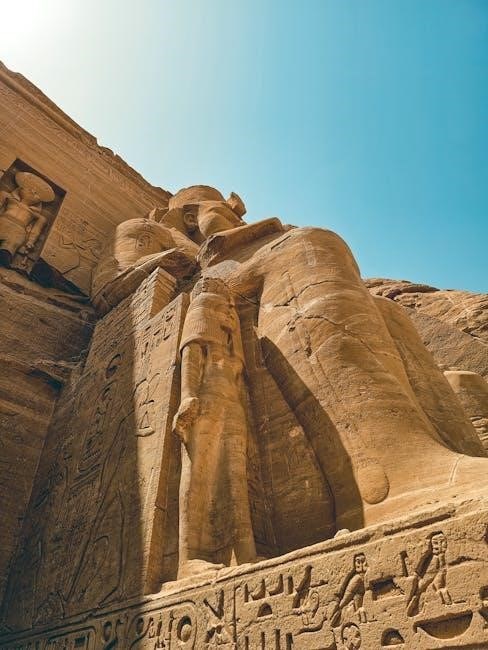
Early Gods and Creation Myths
Early Egyptian deities, like Atum and Amun, emerged from primordial forces, detailed in the Scribd PDF, initiating creation narratives and establishing divine lineages.
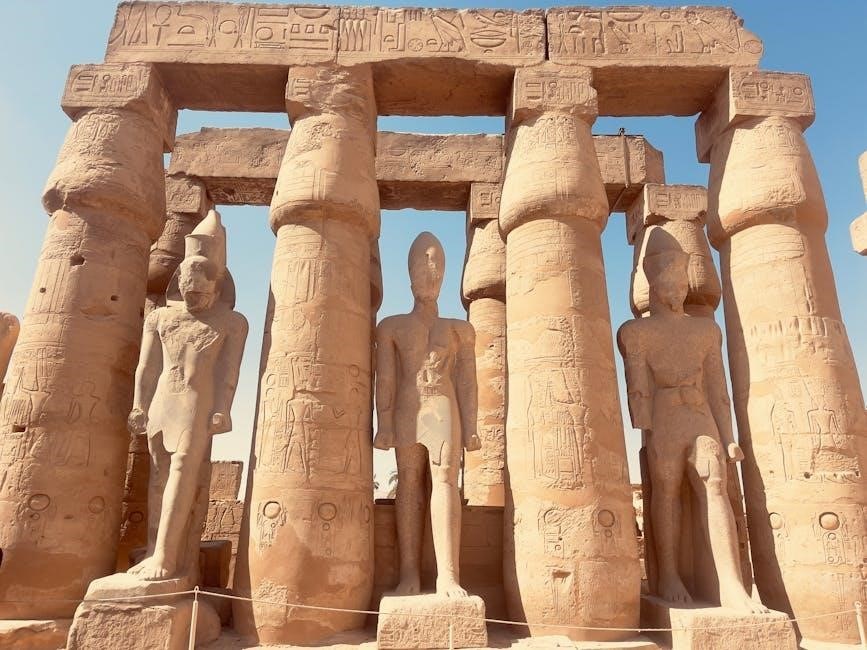
Atum: The Self-Created God
Atum, a pivotal figure in Egyptian cosmology, represents the complete, self-created being from which all other gods and the universe itself originated. The “Egyptian Gods” PDF on Scribd highlights Atum’s importance as the first god, existing before creation and embodying the potential for existence.
He arose from the primordial waters of Nun, a solitary entity who brought himself into being through sheer will and thought. Often depicted as a man, or sometimes with the head of a ram, Atum’s creation myth involves masturbation or spitting to produce the first divine pair, Shu and Tefnut.
This act of self-creation underscores his power and independence. He is considered the source of all life and the foundation upon which the Egyptian pantheon is built, a central concept detailed within the document’s family tree structure.
Kuk: The Darkness Before Creation
Kuk embodies the primordial darkness that existed before the emergence of light and creation, a concept explored within the “Egyptian Gods” PDF available on Scribd. He represents the chaotic, undefined state preceding the ordered cosmos established by Atum and subsequent deities.
Often depicted as a man with a frog’s head, Kuk is intrinsically linked to the concept of darkness and the unseen potential within the primordial abyss. He is not necessarily malevolent, but rather represents the unformed, the unknown, and the potential for all things to come into being.
His presence signifies the necessary void from which creation springs, a fundamental aspect of Egyptian cosmology. The PDF illustrates Kuk’s position within the earliest stages of the divine lineage, preceding the more defined roles of later gods.
Kakuet: The Darkness Associated with the Underworld
Kakuet, as detailed in the “Egyptian Gods” PDF sourced from Scribd, represents the darkness specifically linked to the Egyptian underworld, Duat. Unlike Kuk’s primordial darkness, Kakuet’s darkness is a tangible force within the realm of the deceased, a place of trials and transformation.
He is often visualized as a serpent or a man with a serpent’s head, embodying the dangers and hidden aspects of the afterlife. Kakuet’s role is to guard the pathways and protect the secrets of the Duat, challenging those who seek to navigate its treacherous landscape.
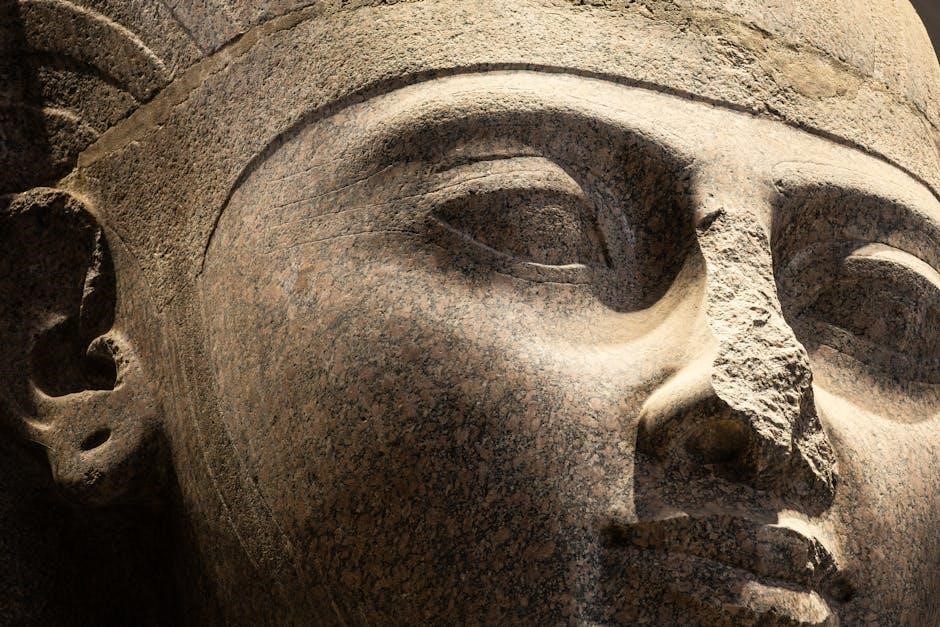
The PDF highlights Kakuet’s association with the chaotic forces that oppose the order established by Osiris, representing the eternal struggle between light and darkness, life and death.
Amun: The Hidden One
Amun, described within the “Egyptian Gods” PDF available on Scribd, is a fascinating deity initially representing an invisible, unknowable force. His name itself signifies “the hidden one,” reflecting his abstract and mysterious nature in early Egyptian theology. He wasn’t initially depicted with a distinct form, embodying the intangible essence of creation.
Over time, Amun rose to prominence, particularly during the New Kingdom, becoming associated with the sun god Ra, forming Amun-Ra – a powerful syncretic deity. The PDF illustrates his evolving iconography, often depicted as a man with a plumed crown, symbolizing his royal status.
Amun’s hidden aspect represents the ultimate source of all things, the unseen power driving the cosmos, and a central figure in Egyptian religious belief.
The Ennead (The Great Nine)
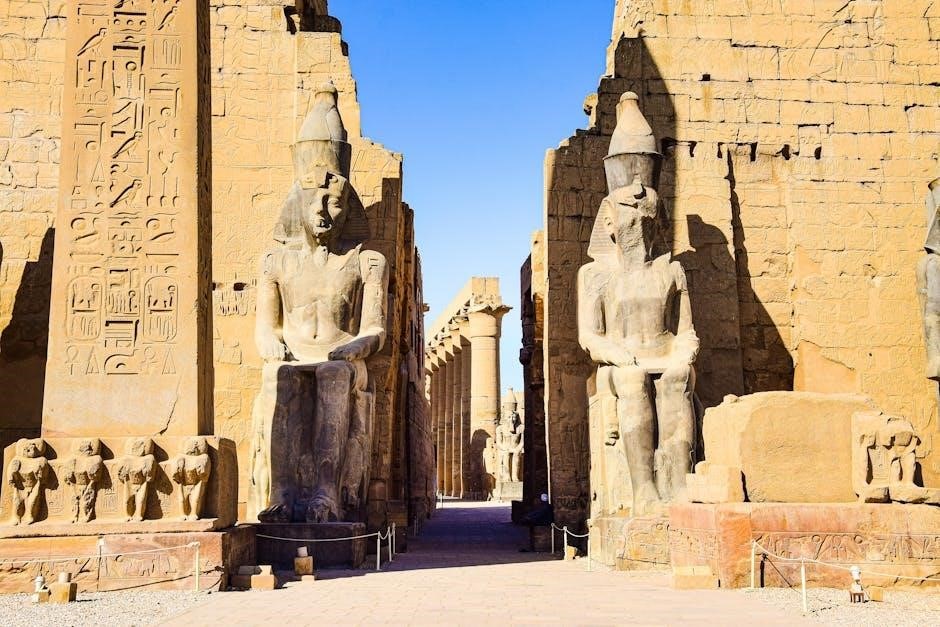
The Ennead, detailed in the Scribd “Egyptian Gods” PDF, represents a core group of nine deities originating in Heliopolis, central to Egyptian cosmology.
Ptah: The Creator God of Memphis
Ptah, as outlined in the “Egyptian Gods” PDF available on Scribd, held paramount importance as the patron deity of Memphis, a significant ancient Egyptian capital. He was revered as a skilled craftsman and creator god, uniquely conceptualized as bringing the world into existence not through speech, like many other deities, but through the power of his thought and heart.
This creative process involved envisioning the world and then naming each element, thereby bringing it into being. Ptah was often depicted as a mummified figure, holding a was scepter – symbolizing power – and an ankh, representing life. He was considered the father of the gods, and his worship extended throughout Egypt, influencing artistic and architectural endeavors. The PDF details Ptah’s role within the Ennead and his connection to other prominent deities.
Sekhmet: The Powerful Lioness Goddess
Sekhmet, as detailed in the “Egyptian Gods” PDF sourced from Scribd, embodies fierce power and protection, visually represented as a lioness-headed woman. She was a formidable goddess, often associated with both healing and destruction, reflecting the dual nature of fire – a symbol closely linked to her.
As a member of the Ennead, Sekhmet was the daughter of Ra, the sun god, and her intense heat was believed to be capable of both inflicting plagues and warding off evil spirits. Her role extended to protecting pharaohs in battle and ensuring their victory. The PDF highlights her complex character, acknowledging her capacity for both wrathful vengeance and benevolent healing, making her a deeply respected, yet feared, deity within the Egyptian pantheon.
Shu: God of Air and Sunlight
Shu, as outlined in the “Egyptian Gods” PDF available on Scribd, occupies a crucial position within the Ennead, representing the vital element of air and the radiant energy of sunlight. Born from the primordial deities Atum, Shu’s primary function was to separate Nut, the sky goddess, from Geb, the earth god, creating the space necessary for life to flourish.
This act of separation is central to Egyptian cosmology, and Shu is often depicted standing between them, physically upholding the heavens. The PDF emphasizes his role in ensuring the daily cycle of the sun, bringing light and warmth to the world. He is a foundational deity, embodying the breath of life and the essential forces that sustain existence, a key figure in the creation narrative.
Tefnut: Goddess of Moisture and Rain
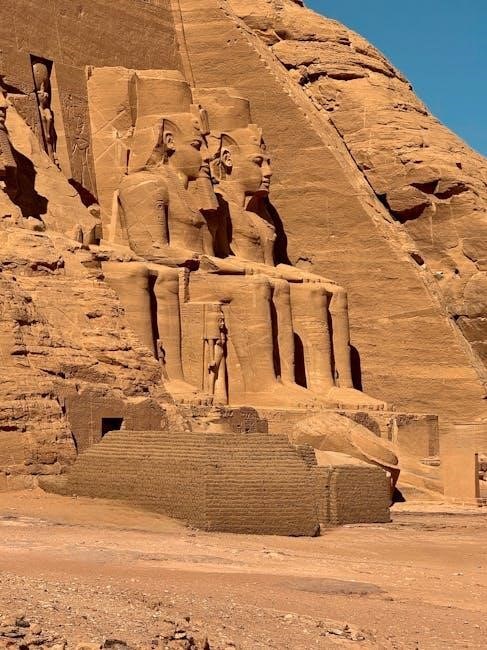
Tefnut, detailed within the “Egyptian Gods” PDF sourced from Scribd, is the goddess embodying moisture, rain, and humidity – essential elements for agricultural prosperity and life itself. As part of the Ennead, she is the daughter of Atum and sister-wife to Shu, the god of air. Together, they represent a fundamental duality in the Egyptian worldview.
The PDF highlights Tefnut’s importance in the annual inundation of the Nile, the lifeblood of Egypt. Her absence was believed to cause drought, and her return brought the vital rains. Often depicted as a lioness, she possesses a fierce protective energy, safeguarding the land’s fertility. She is a powerful force, intrinsically linked to the rhythms of nature and the continuation of life.
The Next Generation of Gods
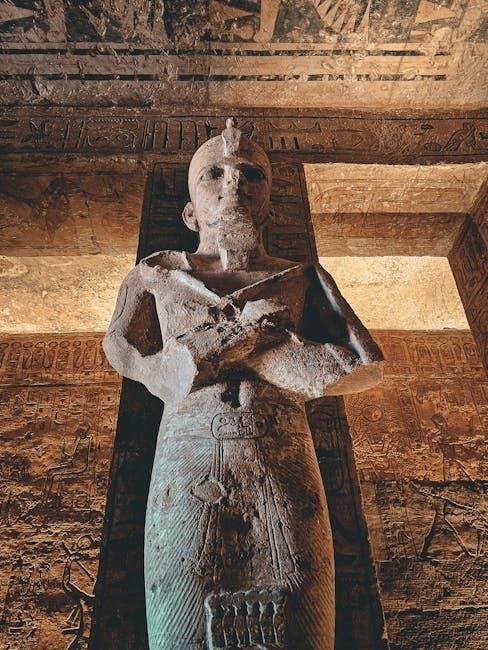
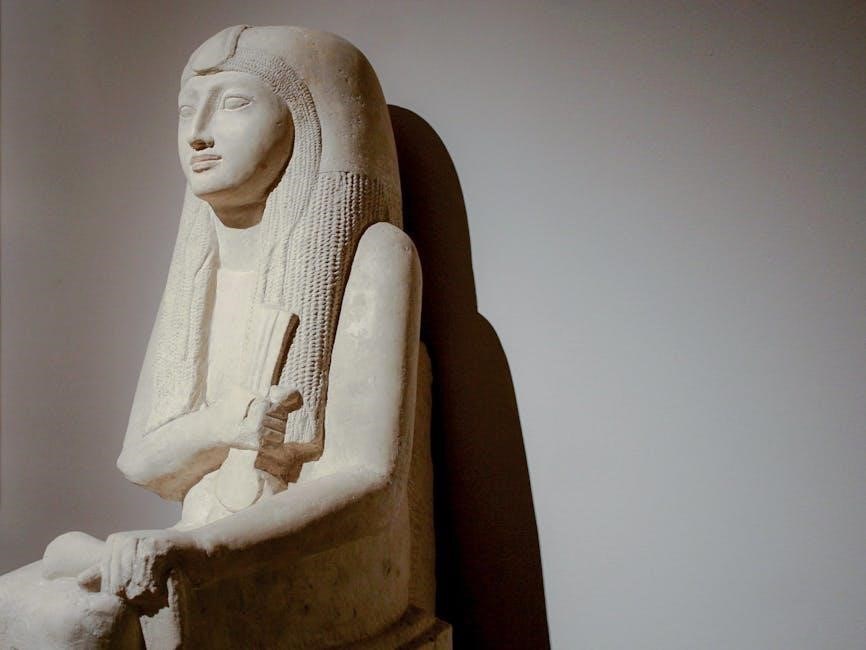
The offspring of Shu and Tefnut, Geb and Nut, represent the earth and sky, respectively, as outlined in the “Egyptian Gods” PDF available on Scribd.
Geb: God of the Earth
Geb, the primordial earth god, emerges as a crucial figure within the Egyptian pantheon, detailed in resources like the “Egyptian Gods” PDF on Scribd. He is depicted lying flat, representing the land, with Nut, the sky goddess, arched above him.
This intimate embrace symbolized the separation of heaven and earth, a foundational concept in Egyptian cosmology. Geb wasn’t merely passive land; he was believed to be a living entity, capable of movement and emotion. He was often shown adorned with green, symbolizing fertility and new growth.
As the father of Osiris, Isis, Seth, and Nephthys, Geb’s lineage is central to many Egyptian myths. His role extended beyond physical earth, embodying its life-giving properties and connection to agricultural cycles, making him a vital deity for the ancient Egyptians.
Nut: Goddess of the Sky
Nut, the magnificent goddess of the sky, is vividly portrayed in Egyptian mythology, with details readily available in resources like the “Egyptian Gods” PDF found on Scribd. She is consistently depicted as a woman arched over the earth, her body adorned with stars, representing the celestial realm.
Her daily journey involved swallowing the sun each evening and giving birth to it anew each morning, symbolizing the cycle of life, death, and rebirth. Nut was the mother of Osiris, Isis, Seth, and Nephthys, born from her union with Geb, the earth god.
This divine pairing created a fundamental duality in Egyptian cosmology. Nut’s protective embrace shielded the world, and her starry form offered hope and guidance, solidifying her importance in ancient Egyptian beliefs and rituals.
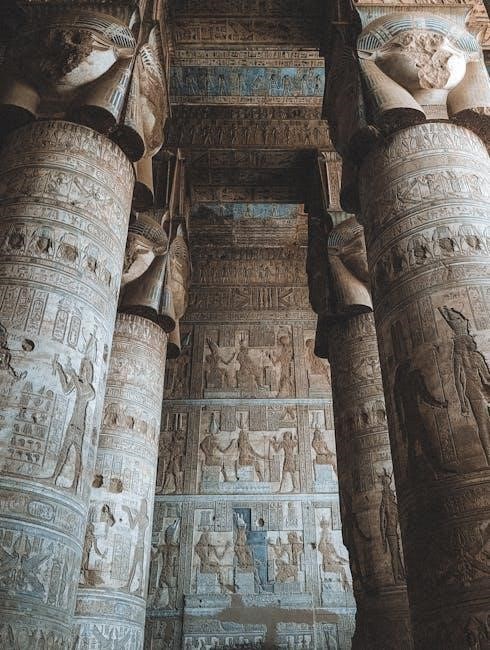
Major Deities and Their Roles
Key deities like Osiris, Isis, Seth, and Nephthys, detailed in the “Egyptian Gods” PDF, held central roles governing life, magic, chaos, and mourning.
Osiris: God of the Underworld and Resurrection
Osiris, a pivotal figure in Egyptian mythology as outlined in the “Egyptian Gods” PDF, reigned as the god of the afterlife, the underworld, and resurrection. Initially a king on Earth, his story details betrayal by his brother Seth, dismemberment, and eventual restoration by his devoted wife, Isis.
This narrative of death and rebirth cemented Osiris’s role as a symbol of hope and eternal life for the Egyptians. He judged the souls of the deceased, determining their worthiness to enter the afterlife. The PDF highlights his importance in funerary rituals and beliefs surrounding the journey to the next world, making him one of the most significant and enduring deities in the Egyptian pantheon.
His association with agriculture and fertility further underscores his life-giving power, even in the realm of the dead.
Isis: Goddess of Magic, Motherhood, and Healing
Isis, prominently featured in the “Egyptian Gods” PDF, embodies the quintessential Egyptian goddess – a powerful protector, devoted wife, and nurturing mother. Her unwavering loyalty to Osiris, even after his murder by Seth, and her magical skills to resurrect him, established her as a symbol of devotion and potent magic.
The PDF details her role extending beyond the afterlife; she was revered as a goddess of healing, magic, and motherhood, offering protection to children and aiding women in childbirth. Egyptians sought her assistance for various ailments and blessings.
Her widespread worship throughout Egypt and beyond demonstrates her enduring influence and the profound impact she had on the religious beliefs of the ancient world.
Seth: God of Chaos, Desert, and Storms
Seth, as outlined in the “Egyptian Gods” PDF, represents a complex and often misunderstood figure within the Egyptian pantheon. Frequently depicted as the antagonist in the Osiris myth, he embodies chaos, disorder, and the harsh realities of the desert and violent storms.
The document highlights his association with foreign lands and the unpredictable forces of nature, contrasting sharply with the ordered world favored by many other deities. While often vilified for murdering Osiris, Seth also played a crucial role in defending Ra during his nightly journey through the underworld.
His duality reflects the Egyptians’ understanding of the necessary balance between order and chaos in the universe.
Nephthys: Goddess of Mourning, Rivers, and Night
Nephthys, detailed within the “Egyptian Gods” PDF, is a powerful goddess often associated with mourning, the night, and the protective aspects of the afterlife. She is frequently depicted as a compassionate figure, particularly known for her devotion to her brother, Seth, and her crucial role in assisting Isis in reassembling the dismembered body of Osiris.
The document illustrates her connection to the waterways, specifically rivers, symbolizing the flow of life and death. Unlike some deities with grand temples, Nephthys’ worship was often more personal and focused on funerary rites and protection.
Her presence offered solace and hope during times of loss and transition.